
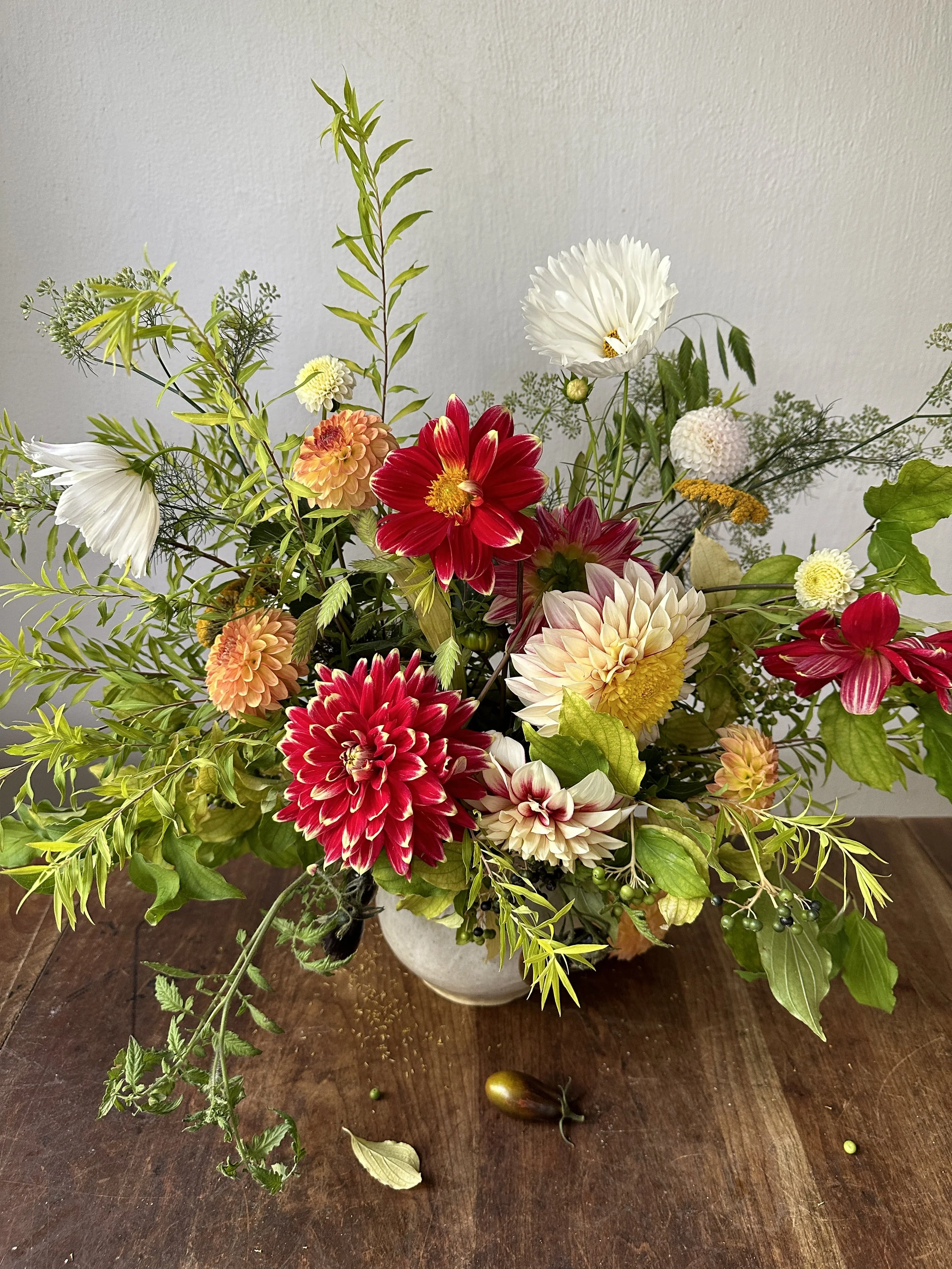
Fragrance is Life! Winter Botanicals and Their Heady Scents
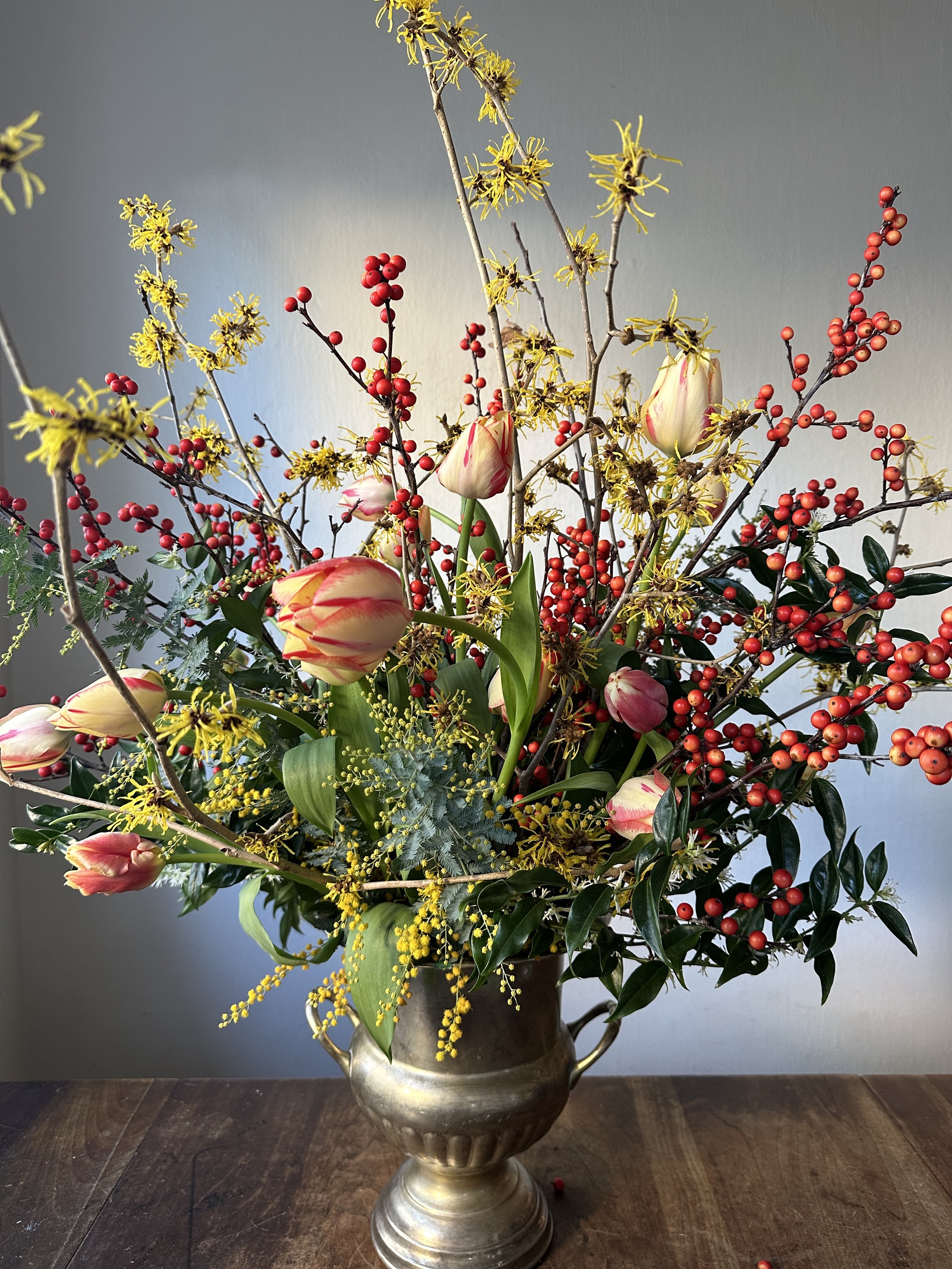
‘Spryng Break’ tulip from La Flor Farm, with mimosa, witch hazel and ilex.
Occasionally, at the tail end of the Pacific Northwest winter, we get a string of gorgeous days. I’ve learned not to expect them - joy is fragile at this time of year, and it’s best not to get hopes up. Today I leashed my dog and stepped outside wrapped in woolens and insulated rain boots and blinked, blinked, blinked. There was sun, it was warm, I was not wet. I felt joy!
One of the most striking elements of this most pleasant stroll of 2026 was the heady scent in the air. I was debauched. As Bert and I walked through the neighborhood we were hit with waves of fragrance from flowering plants, warmed in the February sun. These flowers are humble in their looks - you’ll need to bury your nose in a branch to confirm that this scraggly little such & such smells like heaven, but she does.
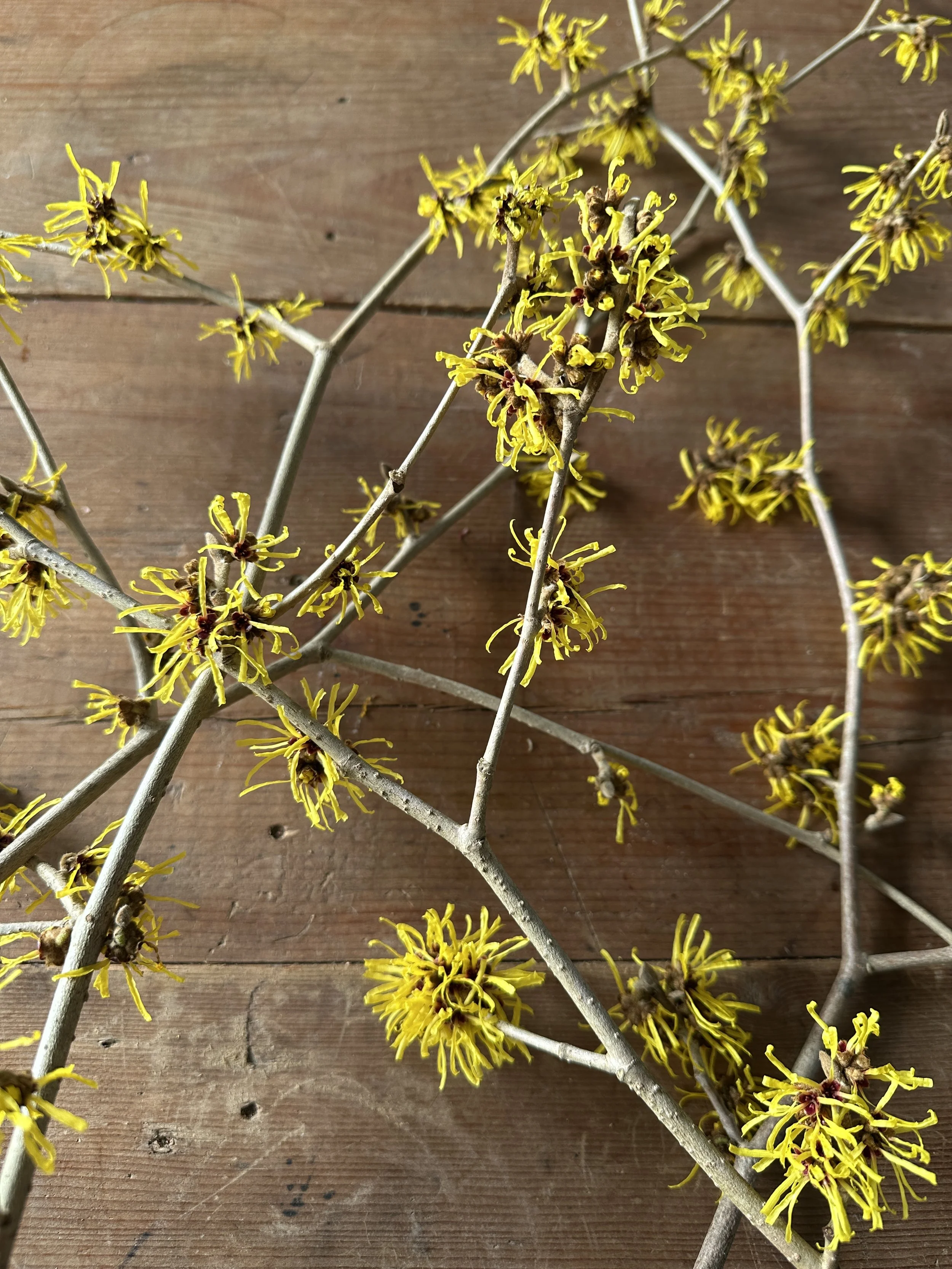
Witch Hazel, grown by DVF Flowers, sourced at Seattle Growers Market
I asked my friend and teacher, Susan Papanikolas of How Does Your Garden Grow: Why do winter flowers have such an incredible scent? She has heard that one reason is that there are less pollinators in cold months, and plants need to advertise their wares loudly. This is no time for subtlety, a winter flower must toot her horn to attract buzz. Makes sense! Susie has a fantastic short video about her favorite fragrant plants in winter, here is a link.
I love designing with these botanicals in late winter. After the holiday cheer is long gone a few branches of witch hazel, viburnum or sarcococca is a fantastic peek into spring. When you are near a vase holding one of these enchantresses you can’t help but lean in, inhale, and have an elevated mood. These are difficult botanicals to find as cut stems, they’re slow growers and not a great fit for cut flower production. If you’re lucky enough to have established plants in your garden, harvest branches early in the day and let them hydrate in a deep bucket of water for several hours before designing with them. I’ve found that the woody winter branches have a great vase life, and may even start to leaf out in the vase after the blooms have faded. More sneak peeks of spring!
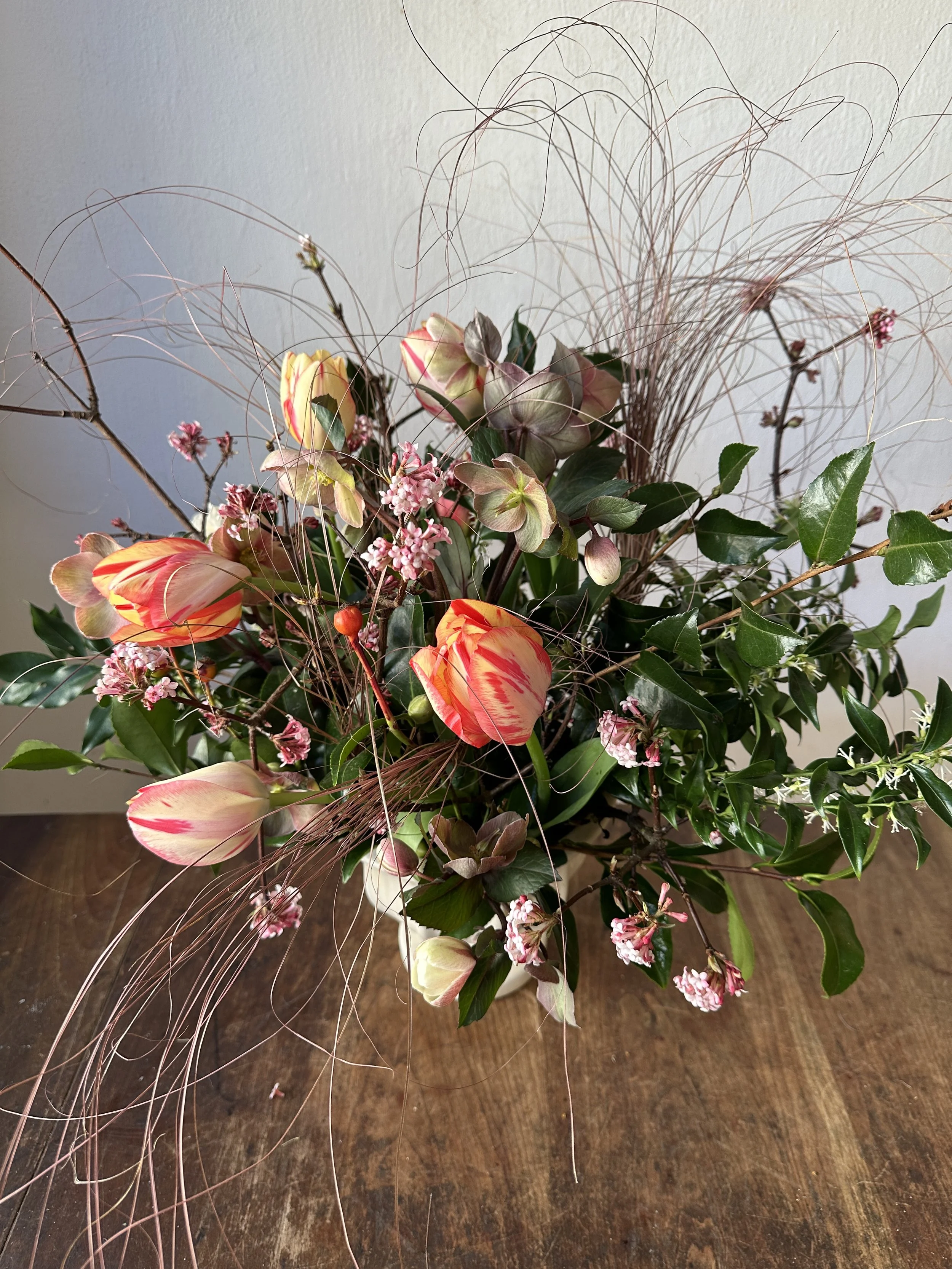
Viburnum, sarcococca, ‘Spryng Break’ tulips, hellebores, rosehips and sedge grass.